UK ICTS Reporting from 2027: What Intragroup Loans May Need to Disclose



The International Controlled Transaction Reporting Regulations come into force on 26 November 2026, introducing a new UK transfer pricing transparency requirement, the International Controlled Transactions Schedule (ICTS).
UK ICTS reporting will apply to accounting periods beginning on or after 1 January 2027. The International Controlled Transactions Schedule (ICTS) will require in-scope businesses to report specified information on relevant cross-border related-party transactions to HM Revenue & Customs (HMRC).
For groups with intragroup loans, the proposed disclosures make it important to align loan data, credit assessments and transfer pricing documentation. HMRC intends to use the information for automated, data-led risk assessment.
The International Controlled Transaction Reporting Regulations come into force on 26 November 2026. As of 13 November 2026, HMRC’s notice and final ICTS template have not yet been published. The detail of what businesses must report may therefore change.
Who must file an ICTS and when?
The ICTS introduces an annual reporting requirement for businesses within scope of the rules. It will require additional information on relevant controlled transactions, subject to the applicable requirements and thresholds.
Potentially affected entities include UK-resident companies, non-UK-resident companies with UK permanent establishments, UK companies with foreign permanent establishments and partnerships. Whether a particular entity must file, and which transactions it must report, depends on its circumstances and the applicable rules.
The reporting requirement applies to accounting periods beginning on or after 1 January 2027. This is the start of the first possible reporting period, not a universal filing deadline. For accounting periods ending on or before 30 September 2027, the regulations provide a transitional deadline. For later periods, the applicable deadline depends on the entity and the relevant return requirements.
Groups should check their obligations against the International Controlled Transaction Reporting Regulations 2026 and HMRC’s final notice when it is available.
What is the timeline for UK ICTS reporting?
HMRC consulted on the draft regulations, notice and template between 16 June and 31 July 2026. The final regulations were made on 30 October 2026 and laid before the House of Commons on 4 November 2026. They come into force on 26 November 2026.
As of 13 November 2026, HMRC had targeted 26 November 2026 for publication of its notice on the thresholds, form and content of the schedule, with detailed guidance to follow by 31 December 2026. These are target dates, not confirmation that the documents have been published.
The first in-scope accounting periods begin on 1 January 2027. Groups should therefore identify the information they may need to capture from the start of their reporting period, while checking the final requirements when HMRC publishes them. The HMRC consultation on the ICTS sets out the policy and draft requirements.
What intragroup loan information may the ICTS require?
Under HMRC's draft ICTS template, businesses may need to report detailed information on specified intragroup loans, including loan terms and credit-related data. Depending on the final HMRC notice, entities may be required to disclose information on their five largest loans. The draft covers the factors used in an intragroup loan pricing analysis, as shown below.
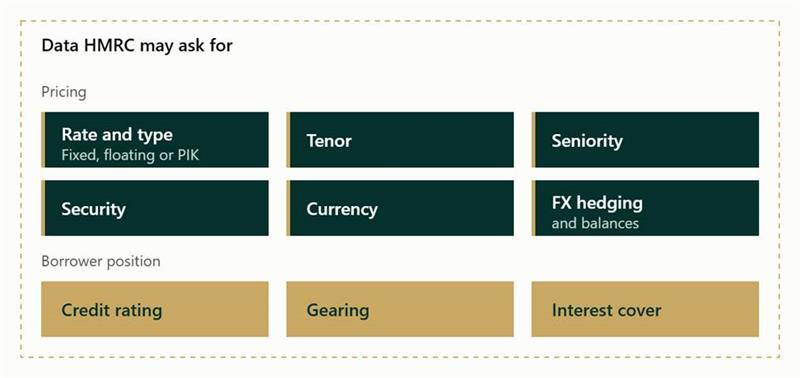
These details matter because they help explain how an intragroup loan was priced. A rate cannot be assessed in isolation from the borrower's credit profile and the terms of the financing.
Groups should review the draft template alongside their loan agreements, treasury records and credit assessments. They should then check their data mapping against the final notice and template before filing. For a broader discussion of the factors involved, see our article on intra-group loan transfer pricing.
How will HMRC use ICTS information?
HMRC’s stated objective is to use the ICTS to support a more data-led approach to transfer pricing risk assessment. Standardised information may help it identify areas for further review and target enquiries more effectively.
Automated risk assessment does not mean that every reported transaction will be subject to an enquiry. It does mean that groups should be able to explain the information they report and how it relates to the analysis supporting their tax return.
For example, a loan’s interest rate, stated credit rating and terms should be consistent with each other. A difference between the data reported and the underlying analysis may warrant investigation and reconciliation by the group before filing. Such a difference does not, by itself, determine how HMRC will assess a particular transaction.
How can groups align ICTS loan data with transfer pricing documentation?
Start by comparing the information likely to be reported with the evidence used to price and document each relevant loan. Loan agreements, treasury systems, credit assessments and transfer pricing reports may all hold parts of the same picture.
A useful reconciliation checks whether the borrower, lender, currency, loan terms, credit assessment and pricing analysis are consistent across those sources. Where they differ, the group should understand why, resolve errors and document any legitimate differences.
This process also helps establish ownership. Treasury, tax, finance and legal teams may each hold information needed for the schedule, so the person preparing the return needs a clear route to obtain and verify it.
For more context on the analysis behind financial transactions, read our guide to transfer pricing for financial transactions.
How can groups prepare for ICTS reporting?
Groups do not need to wait until the first filing deadline to prepare. A practical starting point is to:
- Identify entities and cross-border related-party transactions that may fall within scope.
- Review the draft loan disclosures and map the requested information to existing agreements, treasury records and credit assessments.
- Compare key loan terms, ratings and pricing inputs with the analysis supporting the tax return and transfer pricing documentation.
- Assign responsibility for investigating differences and maintaining evidence of the review.
- Update the data mapping when HMRC publishes the final notice and template, then test the reporting process before the applicable deadline.
The draft requirements provide a starting point, but the final notice and guidance should determine the completed reporting process.
How Zanders can help with intragroup loan pricing
Consistent reporting starts with traceable loan terms, credit assessments and pricing analysis. Zanders combines transfer pricing, credit and capital markets expertise to help groups analyse intragroup financial transactions.
Our intercompany loan transfer pricing software brings credit analysis, pricing and documentation into one process. Groups can use the underlying analysis to support reconciliation with their reporting data.
The platform supports credit assessments, comparable-based pricing and transfer pricing documentation, with support from Zanders specialists. It can help groups bring together the evidence needed to understand and explain their intragroup financing arrangements.
Discuss how to prepare your intragroup loan data and transfer pricing documentation for UK ICTS reporting with a Zanders expert.
-
Intra-Group Loans Transfer Pricing: What’s Important in H2 2026?

-
Debt Capacity Made Easy with our Latest Transfer Pricing Solution

-
Debt Capacity Analyses for Intra-Group Loans: A Framework for Transfer Pricing Compliance

-
Estee Lauder’s experience with Zanders Transfer Pricing Suite

-
AI in Treasury: Automating Intercompany Loan Pricing

-
Kongsberg Automotive’s road map to a transformed treasury

-
Cash Pool Transfer Pricing in Practice: Insights from Treasury, Tax, and Technology with Kyriba

-
Mastering Financial Transaction Transfer Pricing

-
Find your formula: Our guide to pricing intra-group loans


Ready to prepare your intragroup loan data and transfer pricing documentation for UK ICTS reporting?
Talk to an expert